









Key takeaways
-
Most drummers who can't hear the click track don't have a click-level problem — they have an isolation problem.
-
Turning up the click creates a volume escalation loop that leads to ringing ears and stage fatigue.
-
UE Pro Custom In-Ear Monitors deliver up to 26 dB of isolation, letting you run your mix at a comfortable volume with full clarity.
-
The drummer's path: UE 250 (universal entry), UE 6+ Pro (custom entry), UE 11 Pro (working drummer standard), UE LIVE (touring).
-
UE Pro customs come with a 30-day return option (minus customization fee) and a 90-day fit guarantee.
You're mid-set. Loud stage. The kit is bleeding into your in-ears. You can feel the click pulse somewhere behind the snare and the cymbals, but you can't quite lock onto it. You reach for the pack. Click goes up. Mix goes up. Now you're hearing the click — sort of — but everything else is louder too, and your ears are starting to ring.
If that sounds familiar, you're not alone. It's one of the most common monitoring problems drummers run into, and it almost never has the cause drummers think it has.
The problem usually isn't the click level. It's that you can hear too much of the room.
Why turning it up stops working
When the click feels buried, the instinct is to turn it up. That works, briefly. But every gig adds to the same loop. Acoustic drums are loud, cymbals are louder, and stage volume creeps up across the band over the course of a tour. Your in-ears have to compete with all of it, so the click goes up. Then the kick goes up to keep balance, then the vocals, then the click again.
By the end of the tour you're running everything hot, leaving shows with ringing ears, and playing tight because you're stressed rather than because you're locked in.
Volume doesn't fix the problem. It just relocates it.

What's actually happening
The reason your click is buried is that your in-ears aren't blocking out enough of the stage. If you can hear the snare crack and the cymbal wash through your monitors, your ears are doing two jobs at once. They're trying to hear what's coming from the in-ears, and they're trying not to flinch from what's coming through the air.
When that happens, you compensate the only way you can — with volume. The click has to be loud enough to win against an acoustic kit hitting your ears at full force from three feet away. That's a fight your in-ears can't win.
Isolation changes the math. When the seal in your ear is good, the room gets quieter, and the click doesn't need to be loud to be clear — it just needs to be there.
Isolation is the unlock
This is the insight that comes up in every conversation with experienced drummers. Matt Greiner of August Burns Red has been touring with custom in-ears since 2010. His target listening level is around a three on the pack — which sounds impossibly low until you realize what's making it possible. With a proper custom seal, he doesn't need volume to hear the mix. The room is already quiet.
That's the unlock. Lower the room, and the click becomes audible at a comfortable volume. Click, kick, bass, vocals — all there, none of them fighting you for space.
UE Pro Custom In-Ear Monitors deliver up to 26 dB of isolation, which is enough to drop the room down to a level where your mix can sit at a comfortable volume and still come through clearly.
That's a different way of playing. Your shoulders drop, your stress level comes down, and your ears stop ringing after the show. You can hear the click without thinking about hearing the click, which means you can think about playing instead.

What good isolation actually looks like
Three things make isolation work in practice.
Custom fit. Universal in-ears can seal well, but they rely on a foam or silicone tip wedged into your ear canal. A custom in-ear is molded to the exact shape of your ear. The seal is more consistent, it doesn't shift when you move, and it doesn't break down as your ears warm up over a long set.
Stable seal under motion. Drummers move — heads bob, shoulders pump, sweat happens. A monitor that seals well at soundcheck and drifts loose by song three doesn't actually isolate. Custom monitors stay put, which is part of why working drummers move to customs and don't go back.
Lower listening volume. This is the payoff. Once isolation is doing the heavy lifting, you can run your in-ear mix at a lower level. Same clarity, less strain. That's better for your ears, better for your fatigue, and better for your playing.
The drummer's path to better monitoring
Where you start depends on where you are.
Just upgrading from generic earbuds. The UE 250 is a universal-fit IEM built for drummers stepping up from generic gear. It's the easiest way to get real isolation without the custom-impression process.
Making the jump to custom. The UE 6+ Pro is the drummer's entry point into the custom line. Custom-molded fit, drummer-tuned response, the full benefit of a real seal.
Working drummer at the club and theater level. The UE 11 Pro is the most-chosen model among gigging and touring drummers. Punchier low-end, more headroom, the same custom seal.
Touring with tracks, click, and a complex mix. The UE LIVE is built for stages where the monitor mix has a lot going on. More drivers, more separation, more mix detail when you need it.
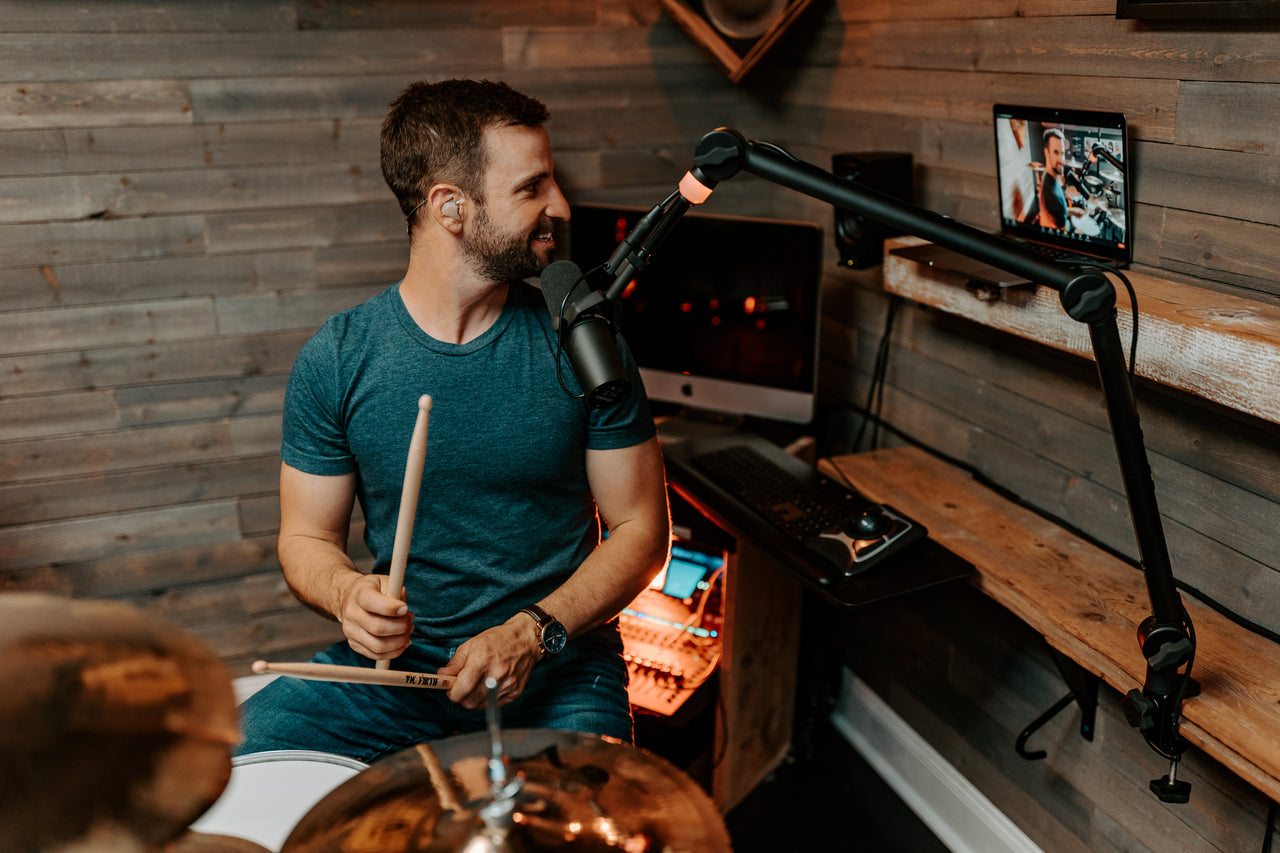
 Photo credit: fotogalvez
What you can do this week
A few practical things to try before you change anything else.
Lower the click before you raise it. If you can't hear the click clearly, try turning everything else down before you turn the click up. The click will often emerge from the mix once you stop fighting it.
Check your seal. If you're on universal IEMs, swap your tips, push them in until you feel a real pressure-change in your ear, and see if the room gets noticeably quieter. If it doesn't, your fit isn't sealing.
Notice your listening level. If your in-ears are running near max volume, that's information. It's almost always a sign that isolation is the bottleneck, not the click itself.
Consider the upgrade path. If you've outgrown generics, the UE 250 is the natural next step. If you've outgrown universals, customs are the answer most working drummers eventually land on — and UE Pro's 30-day return option (minus customization fee) and 90-day fit guarantee let you find out for yourself.
You shouldn't have to fight your gear to hear the click. The right monitoring setup gets out of your way and lets you do what you're actually there to do.
Frequently asked questions
Why can't I hear the click track on a loud stage?
Usually the issue isn't the click level — it's isolation. If your in-ears aren't blocking enough of the room, the click has to compete with acoustic drums and cymbals, and turning it up just escalates the problem. Better isolation lets you run your mix at a lower level and still hear everything clearly.
Will custom in-ear monitors really help me hear the click better?
Yes, for most drummers. A custom fit gives you a consistent seal that holds through a full set, which means more of the stage gets blocked out and your click doesn't have to be loud to be audible. UE Pro Custom IEMs deliver up to 26 dB of isolation — a meaningful step up from most universal IEMs.
How loud should my in-ears actually be?
Lower than most drummers think. Working drummers on custom IEMs often run their listening level at a fraction of what they'd need with universals. The goal is a mix that's clear, not loud.
What's the easiest first step if I'm on generic earbuds?
The UE 250 is a universal-fit IEM built for drummers and a common first step up from generic earbuds. It gives you real isolation without the custom-impression process. When you're ready for the next jump, the UE 6+ Pro is the drummer's entry point into the custom line.
Will better isolation help protect my hearing?
Better isolation lets you run your mix at a lower volume, which helps protect your hearing over the long run. It also reduces ear fatigue from a single set, which most drummers feel right away.
Related reading: The Best In-Ear Monitors for Drummers: A 2026 Buyer's Guide walks the full custom lineup model by model. The Drummer's Guide to Playing Longer and Hearing Better goes deeper on the listening-level and hearing-fatigue thread.