









Week in and week out, churches have one main goal: to make their message heard as clearly and effectively as possible.
Nearly every modern church has some form of live music — from a single musician on guitar or piano to large bands and choreographed productions that can rival the size and expertise of touring groups.
Churches face unique challenges when creating a dynamic musical environment. Physical buildings vary widely. Many congregations have their own permanent facilities — in all shapes and sizes, with all manner of acoustic challenges — while other teams set up and tear down in rented auditoriums, gyms, and schools every weekend and some weeknights.
Church budgets are just as varied as the spaces in which they meet. Some worship leaders have funding for state-of-the-art mixing boards and PAs; many teams are still working with gear donated years ago by a congregant and can’t afford to upgrade.
One common challenge across the board is stage volume. Team leaders can find themselves in a tug-of-war between their musicians, sound engineers, and congregation. Musicians want to push stage volume so they can hear themselves clearly. Sound engineers want lower stage volume so they have more control over the mix. The congregation wants to feel the music without being blown away by a loud amplifier.
Making the move to in-ear monitoring addresses a number of these issues. Our church, Clovis Hills Community Church of Clovis, CA, made the switch to in-ear monitoring for our entire team several years ago and never looked back. With a roster of over 40 musicians and a congregation of roughly 1,500 per week, we were looking to solve several long-running problems.
Our takeaways: in-ear monitoring helped us clean up our house mix and reduce stage noise, opened us up to new creative opportunities, and helped our musicians protect their hearing.
Cleaning up our house mix
Floor wedges were always a major battle for our team. We were limited in the number of mixes we could produce by how many amps we were willing to purchase and how much floor space we had available.
Since not every musician could have a dedicated floor wedge, some members had to share. That led to the “more of me” problem: each musician competing to put more of their own sound in the shared wedge to hear themselves. The end result was unsustainable stage noise and feedback.
This issue isn’t unique to houses of worship — nearly every venue that relies on wedge monitors runs into it — but the expectation of stage noise in a traditional music venue versus a worship service is very different.
Switching to in-ears gave each team member their own personalized mix and let us regain control over our room. It also eliminated the feedback driven by excessive stage noise. For a deeper look at the comparison, see In-Ear Monitors vs. Wedges.
Opening us to new creative opportunities
This may have been our favorite part of making the switch. With the entire team on in-ears, we were able to add several new creative elements to our weekend experience.
We started by moving the band to click tracks, which helped create musical consistency across services and let us add backing loops to fill out our mix. Click and backing tracks weren’t possible with wedge monitors — the entire congregation would have heard the click keeping time.
Over time, we were able to give the technical team a live talkback channel to the band, which has helped services run more smoothly.
We also added a live music director on stage who can speak to the musicians during the service to help keep transitions and musical moments seamless. These cues are invisible to the congregation but meaningful for the band.
For a complete walkthrough of how to set up a silent stage in a worship setting — including gear, instrument options, and acoustic treatment — see How to Set Up a Silent Stage in Your House of Worship.
Helping our musicians protect their hearing
A live band is loud. At Clovis Hills Community Church, our building is cavernous, with significant natural echo and slapback. Adding live drums and guitar amps only adds to the noise reverberating around the room. By the time we layered in floor wedges, the cumulative volume was a real concern for our team after several hours of rehearsal and performance.
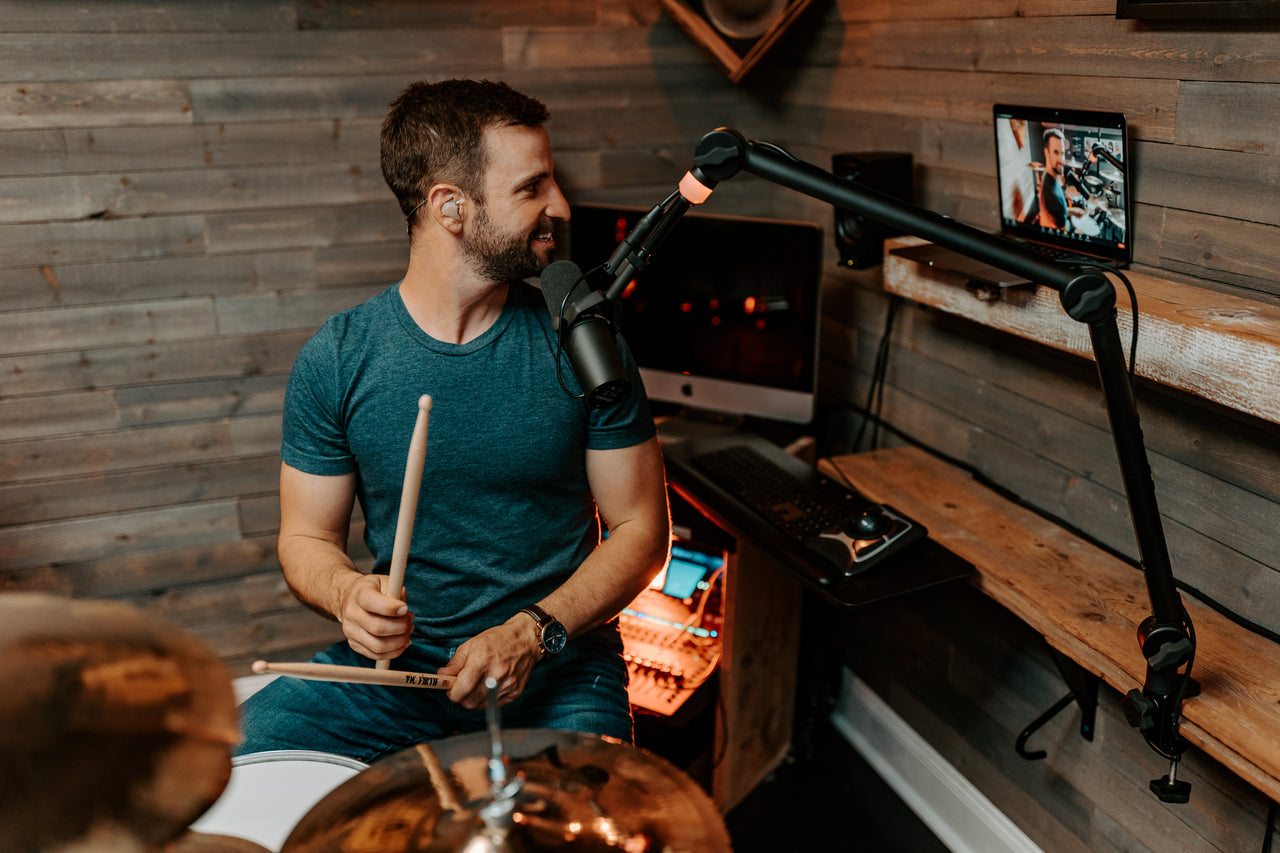
With proper in-ear monitors, our musicians can listen to the elements of the mix at controlled volume levels. UE Pro custom-fit IEMs deliver -26 dB of passive noise isolation, helping our musicians protect their hearing across long worship careers. The custom fit also lets each musician block out the on-stage sounds they don’t need in their personal mix — like the full drum kit when they’re on the other side of the platform.
For more on hearing protection for working musicians, see Hearing Protection for Touring Musicians. For the broader case for lowering stage volume, see Why Lower Stage Volumes Mean Better Shows.
Worth the switch
Many of our team members have moved to UE Pro custom-fit IEMs; the rest are using universal-fit IEMs. UE Pro offers a range of options that fit different roles, preferences, and budgets, so our team could find what worked for each musician.
If your worship team is weighing the switch to in-ear monitoring, the practical and creative benefits we’ve experienced are available to any congregation with the patience to work through the transition. Explore the UE Pro custom in-ear monitor lineup to find the right fit for every role on your team.
Frequently asked questions
Why should a worship team switch to in-ear monitors?
In-ear monitors give each musician a personal mix on stage, eliminate the volume war between shared wedges, reduce feedback risk, and lower overall stage volume so the FOH engineer can build a cleaner mix for the congregation. They also open up creative options like click tracks, backing loops, and a live talkback channel that aren’t possible with wedge monitoring.
How many in-ear monitors does a worship team need?
One per musician. Larger worship teams — like Clovis Hills with over 40 rotating musicians — typically build a mix of custom-fit IEMs for regular team members and universal-fit IEMs for occasional players or new team members getting started.
Do in-ear monitors work with click tracks and backing loops?
Yes, and this is one of the biggest creative benefits of switching. With IEMs, every musician hears the click and backing tracks in their own personal mix. The congregation hears only the live performance through the PA. Click tracks aren’t practical on wedge monitors because the click leaks into vocal mics and across the stage.
Can in-ear monitors help musicians protect their hearing in worship?
Yes. Custom-fit IEMs create a seal that delivers passive noise isolation — UE Pro customs at -26 dB — which lets musicians listen to a clear personal mix at controlled volume levels instead of pushing stage volume up to compete with the room. Across long worship careers, controlled volume habits help musicians protect their hearing.
Are universal-fit IEMs good enough for a worship team?
Universal-fit IEMs work well for occasional players, rotating volunteers, and team members getting started with IEM monitoring. Custom-fit IEMs offer a more secure fit, better isolation, and the kind of comfort that holds up across long worship sets. Most established worship teams use a mix of both.